Executive Summary
Cybersecurity ROI follows an asymmetric cost principle where low-cost attacks force exponentially higher defensive expenditures. Drawing parallels from modern military doctrine—where inexpensive drone swarms overwhelm million-dollar air defense systems—enterprises face comparable economics: attackers operate at minimal cost while defenders must invest heavily in detection, response, and infrastructure. This dynamic is neither inevitable nor immutable. Organizations that adopt layered defense architectures, risk-based prioritization, and integration of security with enterprise risk management can invert the equation, building resilient postures without proportional budget escalation. The challenge lies in aligning cybersecurity investment to measurable business outcomes rather than reacting to threat volume alone.
Key Points
Cost Asymmetry Mechanics: Threat actors deploy commodity attack tools (phishing kits, ransomware-as-a-service) at near-zero marginal cost, while defenders absorb expenses spanning detection platforms, incident response teams, forensics, and remediation—creating a structural imbalance that persists without strategic intervention.
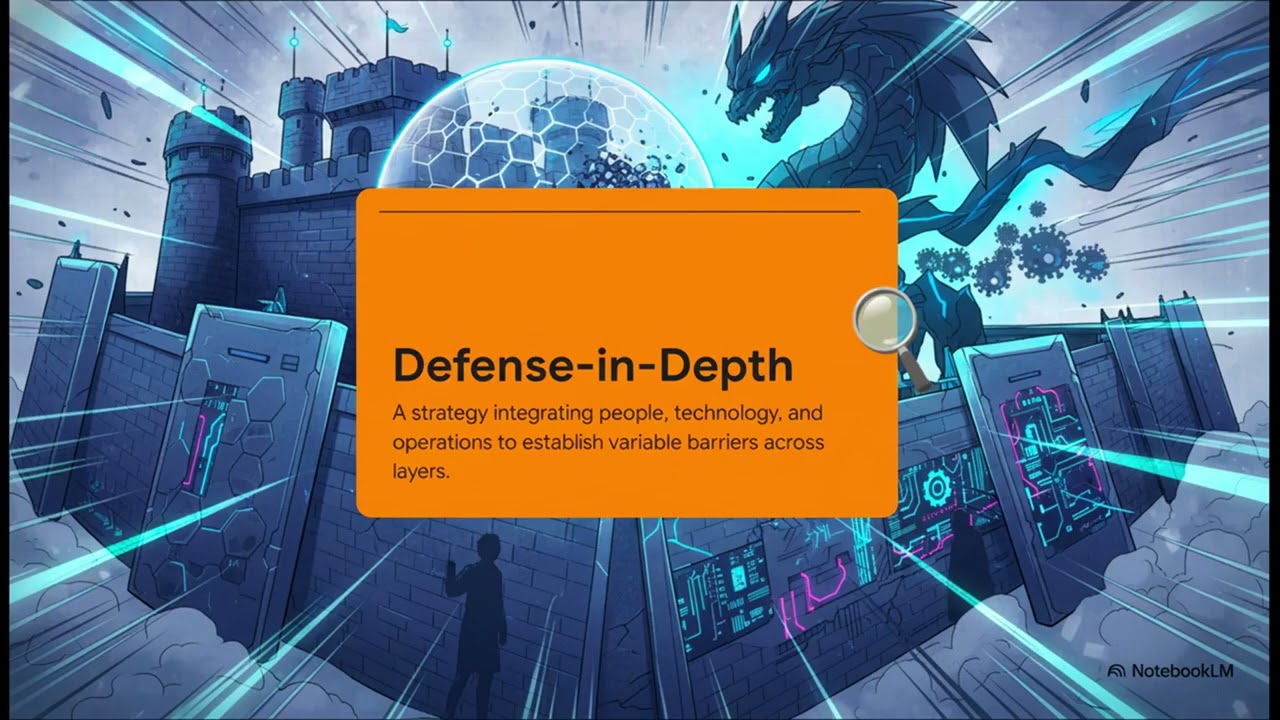
Layered Defense Economics: Multi-tier defenses (network segmentation, endpoint detection, identity verification, behavioral analytics) distribute cost burden across detection and response functions, reducing the per-incident expenditure compared to reactive, perimeter-only strategies.
Risk-Based Prioritization Framework: NIST and CISA guidance emphasizes allocating security budgets according to asset criticality and threat probability rather than uniform coverage, enabling organizations to achieve measurable ROI by protecting high-value targets first and scaling systematically.
Integration with Enterprise Risk Management: Cybersecurity performance goals aligned with organizational risk tolerance and business continuity requirements ensure security spending supports revenue protection, regulatory compliance, and operational resilience—connecting defense costs directly to business value.
Limitation—Threshold Saturation: Beyond a certain investment level, marginal security gains diminish while complexity increases operational costs; organizations must establish optimal defense thresholds rather than pursuing absolute risk elimination, which remains economically unfeasible.
Operational Impact: Cost-effective defense strategies reduce mean time to detection (MTTD), incident response costs, and regulatory penalties, while simultaneously lowering false-positive ratios and security team burnout—producing measurable financial and operational dividends.
References (Golden Sources)
- Calculating the Cost-Effectiveness of Russia’s Drone Strikes
- Making a Business Case for Security - 2023 Edition
- Cybersecurity Performance Goals 2.0 (CPG 2.0)
- NIST SP 800-39, Managing Information Security Risk: Organization, Mission, and Information System
- Integrating Cybersecurity and Enterprise Risk Management (ERM)
Chapters
0:00— Introduction au problème0:32— Le défi économique1:06— Méthode SAM et stratégie1:39— Adaptation aux menaces
Wet & Sea Tech Resources
YouTube (@wetseatech) : https://www.youtube.com/@wetseatech
Shop : https://wetseatech.etsy.com
More articles — Cybersecurity : https://wetandseaai.pascal-froment.workers.dev/tags/cybersecurity/