Executive Summary
Access cards—whether RFID-based, smartcard, or hybrid architectures—represent a critical intersection between physical and logical security. This analysis examines how adversaries exploit asymmetries in card authentication systems, mutual authentication protocols, and cryptographic implementation gaps to bypass enterprise perimeter defenses. Unlike purely software-based threats, card vulnerabilities enable tailored attacks that combine low-cost reconnaissance with high-value credential compromise. Organizations often prioritize card replacement cycles and reader infrastructure investment unequally across facilities, creating systematic weaknesses. The cost-asymmetry principle observed in modern asymmetric conflict—where cheap attack vectors force expensive defensive responses—directly applies to access control: simple relay attacks, cloning techniques, and reader manipulation demand disproportionate countermeasures. NIST frameworks and commercial standards provide mitigation pathways, but deployment gaps persist due to legacy system constraints and incomplete mutual authentication implementation.
Key Points
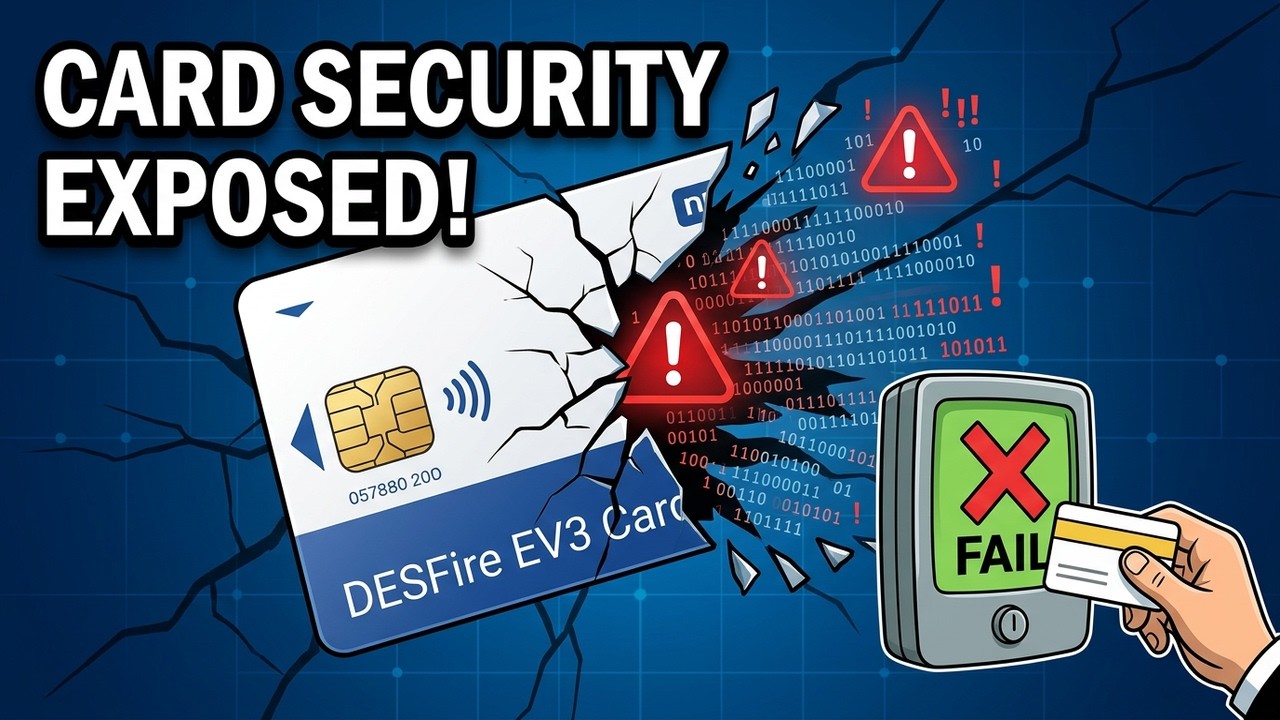
MIFARE DESFire EV3 architecture: Current-generation contactless cards employ AES-128 encryption and dynamic mutual authentication mechanisms; however, implementation vulnerabilities in reader-to-card protocol execution can expose session keys if mutual authentication is incomplete or improperly validated.
Cryptographic protocol weaknesses: Legacy MIFARE Classic cards (Phase 1) contain reversible cipher flaws; even modern EV3 variants require strict mutual authentication enforcement at the reader layer—a step frequently omitted in retrofitted installations to maintain backward compatibility.
Cost-asymmetry in access control: Attackers deploy affordable relay devices, RFID cloning kits (~$100–500), and proximity spoofing techniques to compromise credentials worth far more operationally; defenders must invest in layered verification (multi-factor, distance-bounding protocols) that multiply deployment costs across enterprise sites.
Reader architecture gaps: Access Control Packet System (PACS) reader specifications define secure credential handling, yet field installations often operate readers with insufficient tamper detection, inadequate TLS/DTLS encryption for backend communication, or missing anti-replay mechanisms—particularly in geographically dispersed or retrofitted environments.
Operational risk: Incomplete transition to mutual authentication: Organizations retain single-authentication reader deployments to avoid card reissuance campaigns; this creates a persistent vulnerability window where attackers can impersonate readers without detection, compromising access logs and physical perimeter integrity.
References (Golden Sources)
Access Control Reader and Credential Architecture and Engineering Specification
MIFARE DESFire EV3 contactless multi-application IC - NXP Semiconductors
Integrating Cybersecurity and Enterprise Risk Management (ERM)
Chapters
0:00— Introduction & Channel Welcome0:33— Smart Card Technology Evolution1:46— Cryptography & Security Features2:46— Mutual Authentication Process4:06— Digital Fortress Limitations
Wet & Sea Tech Resources
YouTube (@discover-allin360) : https://www.youtube.com/@discover-allin360
Shop : https://wetseatech.etsy.com
More articles — Cybersecurity : https://wetandseaai.pascal-froment.workers.dev/tags/cybersecurity/